
406mph on Hydrogen: What JCB Hydromax tells us about innovation and continuous improvement
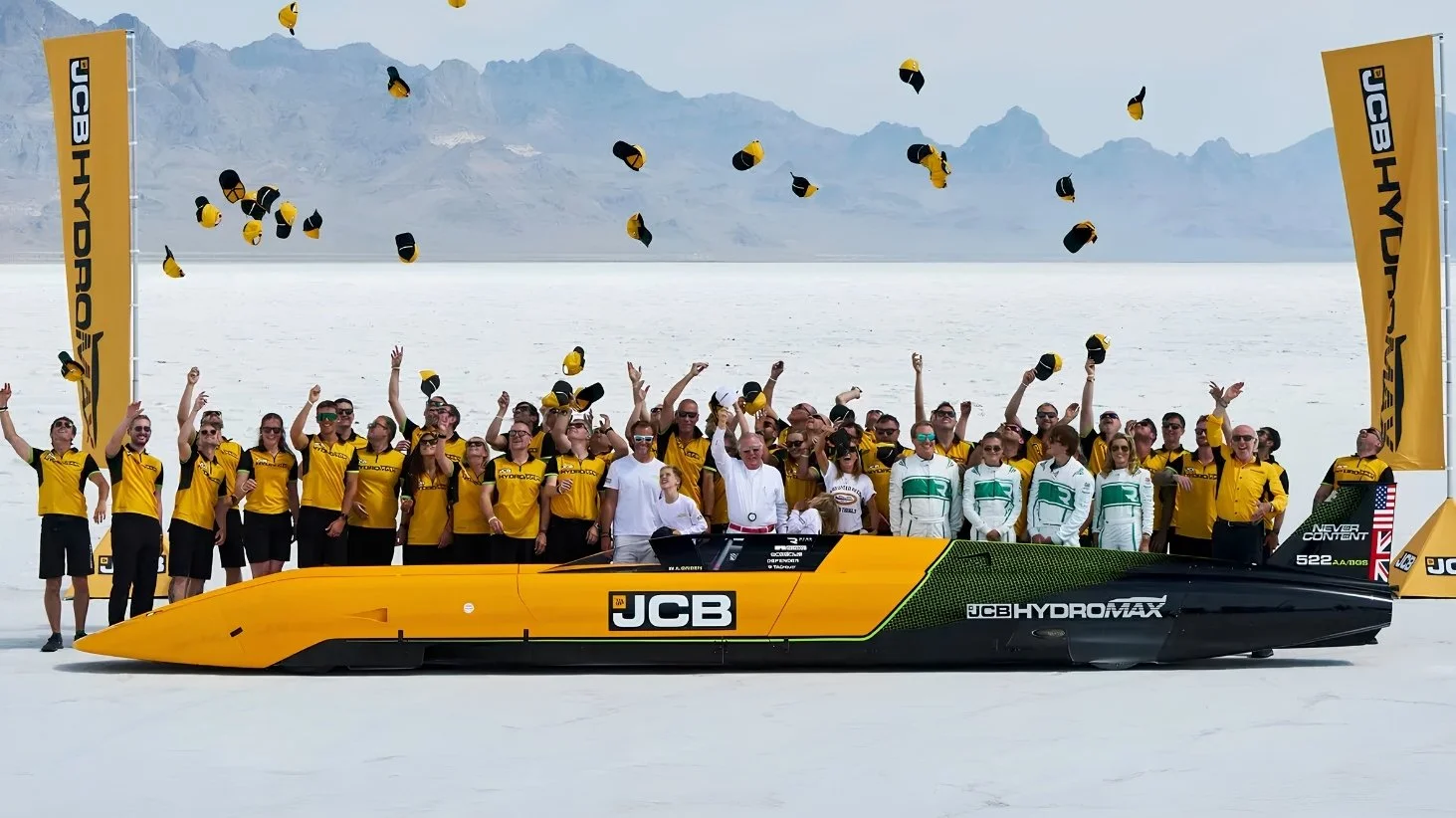
British engineering has a new record to celebrate.
JCB has set a new world land speed record with its hydrogen-powered JCB Hydromax, recording an average speed of 406.320mph (653.908km/h) across two runs at the Bonneville Salt Flats in Utah.
Driven by Wing Commander Andy Green OBE, Hydromax achieved 400.623mph on its first run and 412.135mph on its second. The two runs, completed in opposite directions within an hour in accordance with FIA requirements, produced the record-breaking average. The result remains subject to official FIA ratification.
It makes JCB Hydromax the fastest hydrogen internal combustion vehicle ever recorded – and represents another remarkable chapter in JCB's history of engineering innovation.
But beyond the headline speed, the achievement offers an important reminder about what innovation really requires.
Twenty years of pushing the boundaries
There is a particularly fitting connection between JCB's latest achievement and its engineering history.
Twenty years ago, JCB arrived at Bonneville with the Dieselmax. Also driven by Andy Green, it set a world diesel land speed record of 350.092mph in August 2006.
Two decades later, JCB has returned to the same salt flats and surpassed that speed using hydrogen combustion technology.
The Hydromax is powered by two production-based JCB hydrogen engines, manufactured at the company's engine facility in Foston, Derbyshire. Together, they produce 1,600bhp.
These aren't engines developed solely for a record-breaking car. They are based on the same hydrogen engine technology JCB has developed for its construction machinery as part of its £100 million hydrogen programme.
Taking that technology and proving its capabilities at more than 400mph is an extraordinary demonstration of engineering ambition.
Innovation is about more than a single breakthrough
Land speed records make for spectacular demonstrations of technology, but achievements like this don't happen through one idea alone.
Behind the final result are engineering expertise, testing, problem-solving, learning and countless decisions about how something can be made better.
JCB says every part of Hydromax was stress and simulation-tested, with areas including aerodynamics, suspension, traction control and even camera placement requiring careful consideration. The programme also involved extensive testing before the record attempt at Bonneville.
That process illustrates something familiar to anyone working in quality.
Innovation and continuous improvement are closely connected.
Innovation may involve challenging established thinking and developing something new. Continuous improvement provides the discipline to test ideas, understand performance, learn from results and make changes that move an organisation closer to its objective.
At their best, they reinforce one another.
Building the capability to keep improving
Technology is only part of that equation.
Organisations also need people with the skills and confidence to question existing approaches, understand problems, identify opportunities for improvement and help turn those opportunities into lasting change.
That's why another recent achievement at JCB is worth celebrating.
At Temple QMS, we've recently congratulated a cohort of JCB Quality Practitioners who successfully completed their full suite of Quality Practitioner modules and achieved CQI and IRCA certification.
Their achievement reflects considerable commitment and professional development, while strengthening practical quality management capabilities that can be taken back into the workplace.
For organisations, investing in quality professionals helps develop the skills needed to support consistent performance, continuous improvement and long-term organisational success.
Creating a culture where innovation can thrive
There is an important distinction to make. The JCB Quality Practitioners completing their training with Temple QMS and the engineering team responsible for Hydromax are separate stories.
But together, they illustrate a wider point.
Sustained innovation requires investment in capability.
That can mean investment in technology, research and engineering. It can also mean investing in people, professional development, quality management and the systems that help organisations learn and improve.
The most innovative organisations aren't simply those that occasionally produce a breakthrough.
They create environments where people are encouraged and equipped to improve performance continually – building knowledge, challenging assumptions and applying lessons to whatever comes next.
And sometimes, what comes next is something nobody has done before.
Congratulations to JCB
Setting an average speed of 406.320mph using hydrogen combustion technology is an exceptional engineering achievement and another landmark moment for JCB.
Twenty years after Dieselmax demonstrated what JCB's diesel engineering could achieve at Bonneville, Hydromax has returned to push the boundaries again – this time using production-based hydrogen engine technology.
Everyone at Temple QMS would like to congratulate the JCB Hydromax team and everyone involved in achieving the new record.
We're also proud to work with JCB in developing quality professionals and recently to have celebrated the success of its Quality Practitioner cohort.
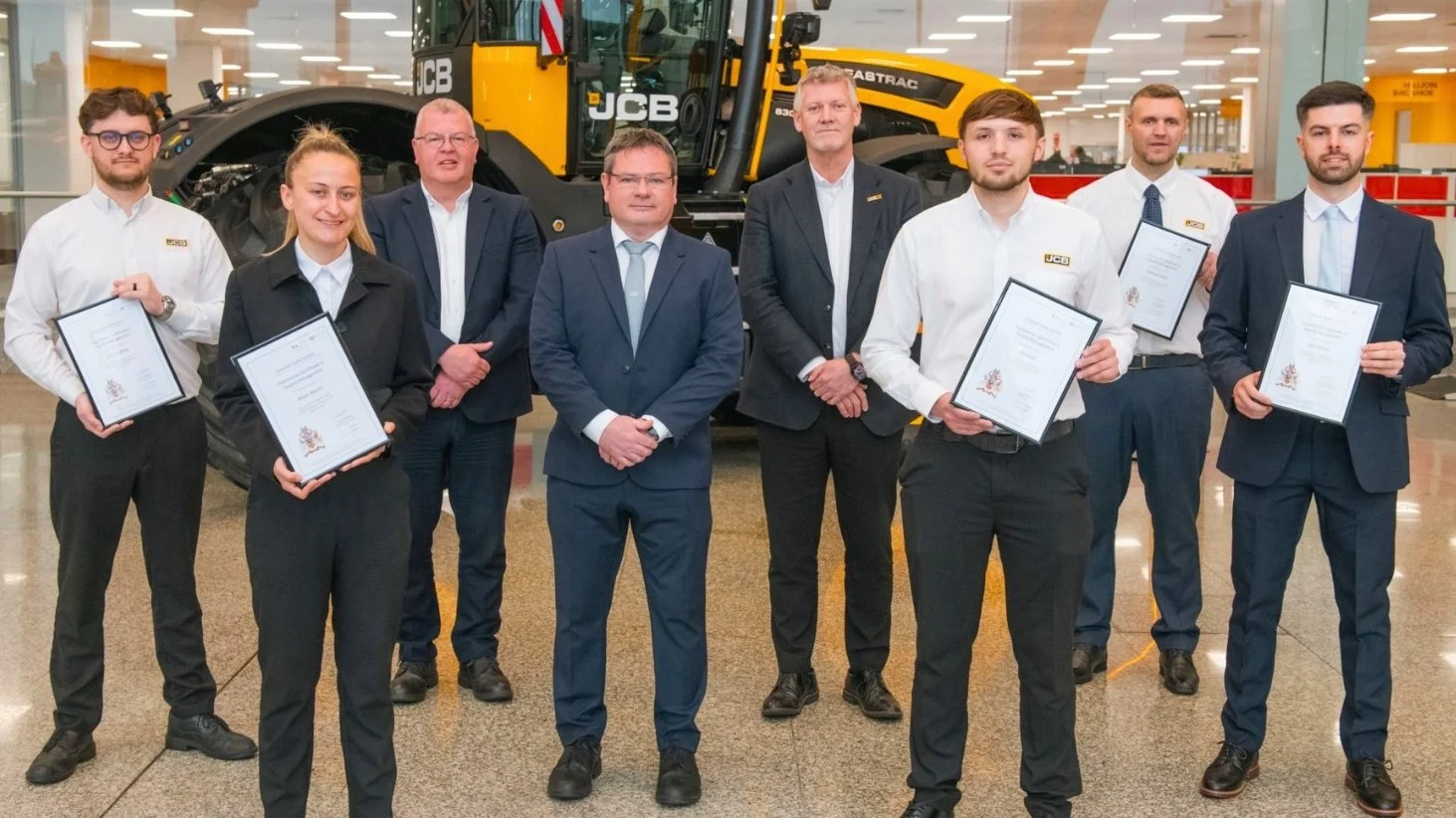
Different achievements, but both powerful reminders of what can happen when organisations continue to invest in people, capability and improvement.
Read more:JCB Quality Practitioners Celebrate CQI and IRCA Certification Success